



Drugs and therapies
Discover the latest developments in drugs and therapies, covering drug discovery, biologics, vaccines, immunotherapies, gene and cell therapies, drug delivery technologies and novel therapeutic modalities advancing treatment options across a wide range of diseases.
Webinars and whitepapers
- Previous
- Next













Drugs and therapies
 Interview
A sceptical guide to AI agents in drug discovery
AI agents promise to transform drug discovery, but where do they really add value? Dr Eric Ma examines search, model choice, vendor lock-in and why scientific expertise matters more than ever.
 Article
Drug discovery in Q3 2026 – what changed and why it matters
Agentic AI, ultralarge virtual screening, molecular glues and human-relevant models were among the key developments in early drug discovery during Q3 2026. Drug Target Review examines what changed, why it matters and what to watch heading into Q4.
 Article
Induced proximity drugs – why complex formation is not enough
A drug can form exactly the complex it was designed to make and still fail to work. Two recently approved induced proximity drugs show why what happens after complex formation – not formation alone – can decide the outcome.
 Article
AI agents vs scientists: what should we automate in drug discovery?
AI agents can search, analyse and plan across drug discovery workflows, but where should scientists hand over control? We examine what to automate, what to check and where human judgement matters most.
Join now
Unlock exclusive industry insights
- Bookmark articles and resources to access anytime
- Enjoy free access to industry leading resources, webinars and insights
- Stay informed with the latest news and breakthroughs
- Receive updates and recommendations tailored to your research interests
 Article
How disease exposes hidden epitopes that AI models may miss
A protein can look very different in disease without a single change to its sequence. Measuring these structural changes could reveal drug targets invisible to genomic and expression data alone.
 Article
How protective gene variants are revealing new drug targets
Finding the right drug target remains one of discovery’s biggest challenges. Human genetics is helping researchers strengthen the evidence before committing years of research and investment.
 Article
Why AI struggles with new drug targets – and how physics could help
Virtual screening can assess billions of compounds, but performance can fall on unfamiliar targets. Combining AI with molecular physics could help make predictions more reliable.
 Article
Turning CNS biomarkers into better drug development decisions
Why do promising CNS therapies struggle to translate into patients? Three experts explore how biomarkers can track therapeutic effects, improve patient selection and guide development decisions.
 Article
Fast-tracking AI-designed binders with cell-free expression and SPR
AI can rapidly generate new protein binders, but wet-lab validation remains a major bottleneck. Combining cell-free protein synthesis with surface plasmon resonance (SPR) enables AI-designed antibody binders to be screened directly from crude extracts, bypassing lengthy cell culture and purification steps.
 Article
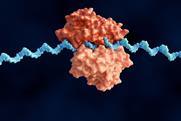
Why more ribosomes can mean less protein in mRNA therapeutics
What happens when the cellular machinery making therapeutic proteins slows down? New research in Nature shows why translation speed could matter for the design of mRNA medicines.
 Article
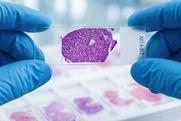
What makes a human biospecimen fit for purpose in drug discovery
Human biospecimens can bring drug discovery closer to human disease, but their value depends on far more than the sample itself. We explore the factors that determine how much researchers can learn from them.
 Article
Why depression needs a different drug discovery strategy
What if depression is not one disease, but many biologically distinct conditions? A major research programme is investigating what this could mean for biomarkers, drug targets and treatment.
 Article
Six assay requirements every researcher using NAMs should know
As NAMs become more widely used in drug discovery, assays must meet the demands of more complex models. Discover six requirements for reliable, reproducible and biologically meaningful data.
 Article
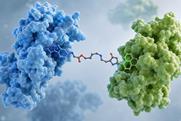
PROTACs vs molecular glues: which degrader fits your target?
PROTACs and molecular glues can both remove disease-associated proteins, but choosing between them is not simple. Our new Discovery Toolkit compares the options to help discovery teams choose the right strategy.
 Report
Building biomarkers that drug developers can rely on
Discover how integrated technologies, multiomic approaches and AI are helping researchers translate complex biological signals into actionable tools for drug development and patient care.
 Article
How rare genetic variants could uncover new drug targets
What if extreme levels of common traits have a different genetic basis? New research suggests rare, large-effect variants could help explain the extremes and identify potential drug targets.
 Article
How AI-driven systems biology will reset the starting line for drug development
AI is making drug discovery faster, but can it make it more successful? Discover why combining AI with systems biology could help researchers tackle the biological complexity behind drug failure.
 Article
600+ patient-derived cancer models expand the search for drug targets
Hundreds of new patient-derived cancer models could strengthen target validation, identify cancer vulnerabilities and provide more representative systems for preclinical drug discovery.
 Article
Why researchers are revisiting bisantrene decades after it was abandoned
An oncology drug abandoned decades ago is getting a second look, with new research uncovering a mechanism that could offer an alternative route to targeting MYC, one of cancer’s toughest targets.
 Article
Targeting childhood myopia progression with 7-methylxanthine
Childhood myopia researcher Dr Klaus Trier explores how 7-methylxanthine targets scleral remodelling and axial elongation, and its potential to slow disease progression and reduce the risk of high myopia.